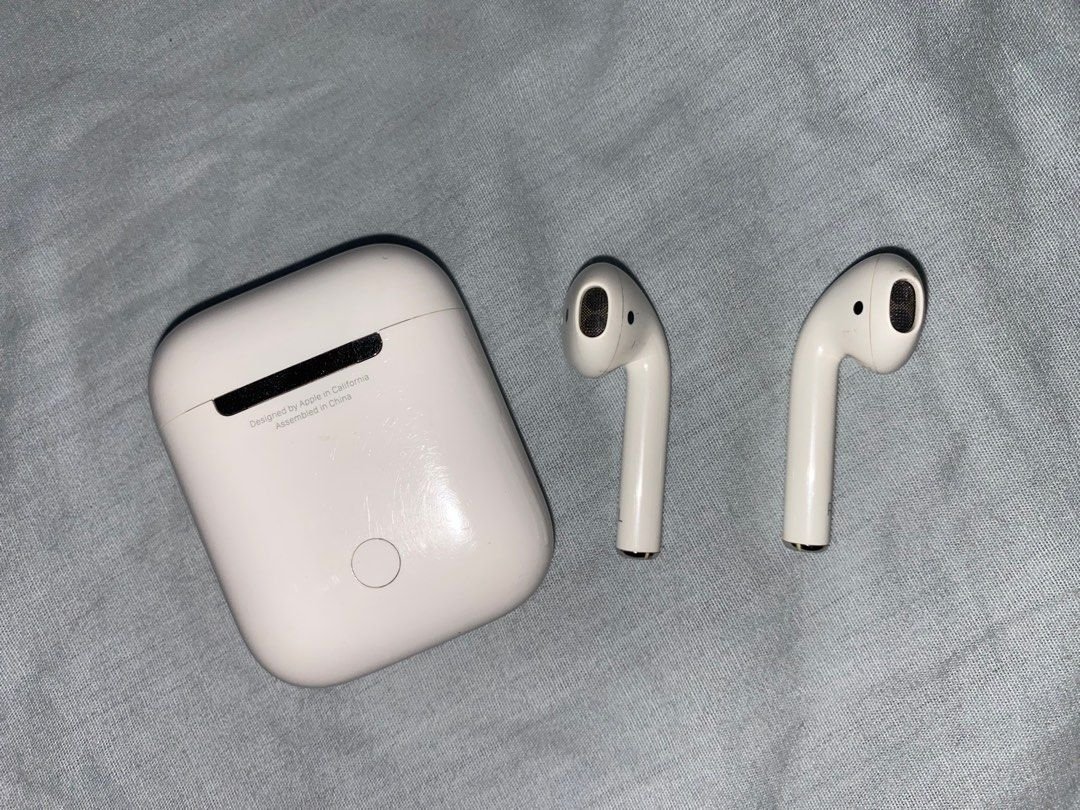
When Apple first introduced its truly wireless earbuds, the term "1st Gen AirPods" immediately entered the tech lexicon. But for many, the real game-changer, the earbuds that set a new standard for premium features, arrived a few years later with the AirPods Pro 1st Generation. While the original AirPods (2016) certainly paved the way, it was the first iteration of the Pro line, released in late 2019, that brought active noise cancellation, adaptive audio, and a truly customizable fit to the forefront. This guide will dive deep into the 1st Gen AirPods Pro features and specifications, exploring what made them a breakthrough product and why they still hold relevance for many users today.
At a Glance: The First-Gen AirPods Pro Essentials
- Release Date: October 30, 2019
- Discontinued: September 7, 2022
- Key Audio Features: Active Noise Cancellation (ANC), Transparency Mode, Adaptive EQ, Spatial Audio with Dynamic Head Tracking, Spatialize Stereo.
- Chip: Apple H1 chip for advanced audio processing and seamless connectivity.
- Design: In-ear fit with customizable silicone ear tips (XS, S, M, L), angled stem, touch-sensitive force sensor controls.
- Fit & Comfort: Ear Tip Fit Test for optimal seal.
- Resistance: IPX4 sweat and water resistance (for workouts and light rain).
- Microphones: Dual beamforming mics for crystal-clear calls.
- Connectivity: Bluetooth 5.0, one-tap setup, automatic switching across Apple devices, Audio Sharing, Find My support.
- Battery Life: Over 24 hours total listening time with Wireless Charging Case; up to 4.5 hours listening time on a single charge (with ANC/Transparency).
- Charging: Qi-certified wireless charging case, Lightning port.
- Dimensions: 1.22 inches (H) x 0.86 inches (W) x 0.94 inches (D) for each earbud.
The Dawn of Premium Audio: Why the First-Gen AirPods Pro Mattered
Before the "Pro" designation arrived, Apple's AirPods were synonymous with effortless connectivity and simple, open-fit design. For a deep dive into the truly original earbuds that started it all, you can Explore the original AirPods. However, the AirPods Pro 1st Generation, launched on October 30, 2019, heralded a new era. It wasn't just another incremental update; it was Apple's emphatic statement on what truly premium wireless earbuds should offer. Discontinued on September 7, 2022, their relatively short lifespan on the market doesn't diminish their impact. They introduced features that quickly became industry benchmarks, from their groundbreaking active noise cancellation to their tailored fit, all while maintaining the hallmark seamless integration with the Apple ecosystem that users had come to expect.
This first Pro iteration aimed to solve common pain points of earlier models: sound leakage, lack of noise isolation, and a one-size-fits-all fit that didn't suit everyone. The answer lay in a new in-ear design, powerful internal processing, and a suite of intelligent audio technologies.
Unpacking the Sound Experience: Audio Innovations
The core appeal of the 1st Gen AirPods Pro lay in their sophisticated audio capabilities, powered by the ingenious H1 chip. These weren't just earbuds; they were a personal sound environment.
Active Noise Cancellation (ANC): Your Personal Quiet Zone
This was, arguably, the headline feature. The AirPods Pro 1st Generation were among the first truly wireless earbuds to offer robust Active Noise Cancellation. Using two microphones—an outward-facing mic to detect external sound and an inward-facing mic to detect unwanted sound inside the ear—the system continuously adapts to your ear and the fit of the ear tips, countering noise with anti-noise before you even hear it. Whether it was the hum of an airplane engine, the chatter of a busy café, or the rumble of public transport, ANC effectively silenced your surroundings, letting you immerse yourself in your audio. This real-time, continuous adjustment provided an unprecedented level of tranquility for a device of its size.
Transparency Mode: Stay Connected to Your World
Just as impactful as ANC was its polar opposite: Transparency Mode. With a simple press of the force sensor on the stem, users could seamlessly switch from complete immersion to hearing their surroundings. This mode uses the external microphones to let ambient sound in, making it feel as though you're not wearing earbuds at all. It was a revelation for situational awareness, allowing you to have a quick conversation, hear important announcements, or navigate busy streets without needing to remove your AirPods Pro. The blend of audio passthrough was so natural that it felt less like a digital trick and more like an extension of your natural hearing.
Adaptive EQ: Sound Tailored to You
The AirPods Pro 1st Gen didn't just play audio; they optimized it for your unique ear shape and the fit of the ear tips. Adaptive EQ automatically tunes the low- and mid-frequencies of the music to the shape of your ear. An inward-facing microphone measures the sound level in your ear and adjusts the audio accordingly, ensuring a consistent, rich listening experience that's personalized in real time. This subtle yet powerful feature contributed significantly to the "excellent sound quality" often lauded in reviews, ensuring bass was deep and treble was clear, regardless of individual ear canal variations.
Spatial Audio with Dynamic Head Tracking: A Cinematic Experience
With a software update, the 1st Gen AirPods Pro gained Spatial Audio, a truly immersive feature that brings theater-like surround sound to your portable audio. Using dynamic head tracking, Spatial Audio places sounds virtually anywhere in a 3D space. When watching supported movies or TV shows, it creates a dynamic soundscape where audio seems to come from all around you, even as you move your head. It makes you feel like the action is happening around you, not just playing in your ears. The H1 chip, combined with accelerometers and gyroscopes in the earbuds, precisely tracks your head movements and the device's position to keep sounds anchored to the screen, providing a truly captivating and realistic audio experience.
Spatialize Stereo: Expanding Your Music
Beyond native Spatial Audio content, the 1st Gen AirPods Pro also introduced "Spatialize Stereo." This feature takes standard stereo audio (like most music) and processes it to create a more expansive, immersive soundstage. While not as dynamic or precise as full Spatial Audio, it gives stereo tracks a sense of depth and breadth that can make listening to music a richer experience, pushing the sound beyond the confines of your ears.
Designed for Your Ears: Comfort and Control
Apple paid meticulous attention to the physical design of the 1st Gen AirPods Pro, understanding that superior audio is moot without comfort and intuitive control.
Customizable Ear Tips & Ear Tip Fit Test: A Perfect Seal
Breaking from the one-size-fits-all approach of earlier AirPods, the Pro model introduced customizable silicone ear tips. Included in four sizes (XS, S, M, L), these tips were crucial for both comfort and the effectiveness of ANC. A proper seal is essential for blocking external noise and delivering optimal bass. To ensure this, Apple integrated an "Ear Tip Fit Test" into iOS. Via your iPhone's Bluetooth settings, this test uses the internal microphone to detect if you've chosen the right size ear tips for a snug fit and optimal acoustic seal, guiding you to achieve the best possible audio experience.
Angled Stem Design and Dimensions
The sleek design of the 1st Gen AirPods Pro featured an angled stem that tucked neatly into the ear, contrasting with the straighter, longer stems of the original AirPods. This ergonomic design not only looked more streamlined but also contributed to a secure and comfortable fit for a wider range of ear shapes. Each earbud measured 1.22 inches tall, 0.86 inches wide, and 0.94 inches deep, making them notably more compact and less obtrusive than their predecessors. A subtle but important distinction is that the 1st generation AirPods Pro featured a slightly shorter stem compared to the 2nd generation, a detail often noticed by keen observers.
Touch-Sensitive Force Sensor Controls
Gone were the tap controls of the original AirPods. The 1st Gen AirPods Pro introduced a touch-sensitive force sensor on the stem of each earbud. This intuitive control allowed users to:
- Press once to play, pause, or answer a phone call.
- Press twice to skip forward.
- Press three times to skip back.
- Press and hold to switch between Active Noise Cancellation and Transparency Mode.
This physical feedback made interactions more deliberate and less prone to accidental touches, enhancing the overall user experience.
Seamlessly Connected: The Apple Ecosystem Advantage
The 1st Gen AirPods Pro truly shined within the Apple ecosystem, thanks largely to the powerful H1 chip and Apple's commitment to seamless integration.
The H1 Chip: The Brain Behind the Brawn
At the heart of the AirPods Pro 1st Gen was the Apple H1 chip. This custom-designed silicon powerhouse wasn't just for audio processing; it was the key to their incredible efficiency, stable Bluetooth 5.0 connectivity, and intelligent features. It enabled hands-free "Hey Siri," faster connection times, and seamless switching between devices, acting as the invisible maestro orchestrating the entire experience.
Effortless Connectivity and Switching
Pairing the AirPods Pro with an iPhone was a magical one-tap setup experience. Once paired with an Apple ID, they would automatically connect to all other Apple devices linked to that same ID—iPad, Mac, Apple Watch, and Apple TV—without any additional setup. The H1 chip facilitated automatic switching across these devices, meaning you could be listening to music on your iPhone, answer a call on your Mac, and then switch to watching a video on your iPad, all without manually adjusting connections.
"Hey Siri" and Announce Messages
The H1 chip also enabled hands-free "Hey Siri," allowing users to summon Apple's virtual assistant with just their voice, without touching their phone or even the AirPods themselves. This made tasks like controlling music, making calls, getting directions, or sending messages incredibly convenient. Further enhancing this, the "Announce Messages" feature (available with iOS 13.2 or later) allowed Siri to automatically read incoming messages as they arrived, ensuring you stayed informed without breaking your stride.
Audio Sharing: Share the Sound
A thoughtful social feature, Audio Sharing, allowed two sets of AirPods (including AirPods Pro 1st Gen) to connect to a single iPhone, iPad, or Apple TV. This meant you and a friend could simultaneously listen to the same song, watch the same movie, or enjoy the same podcast, each with your own independent volume control.
Find My Integration: Never Lose Your Tune
For those moments when an earbud inevitably goes missing, the AirPods Pro 1st Gen integrated fully with Apple's Find My app. Users could view their AirPods Pro's last known location on a map, play a sound to locate them if they were nearby, or even get directions to their location if they were out of range. This feature brought peace of mind to an otherwise stressful situation.
Powering Your Day: Battery Life and Charging
Reliable battery life is non-negotiable for wireless earbuds, and the 1st Gen AirPods Pro delivered a robust experience, especially when paired with its charging case.
Extended Listening with the Wireless Charging Case
On a single charge, the AirPods Pro 1st Gen offered up to 4.5 hours of listening time with Active Noise Cancellation or Transparency Mode enabled. With these features off, that extended to up to 5 hours. Critically, the included Wireless Charging Case held multiple additional charges, extending the total listening time to over 24 hours. This meant most users could go days without needing to find a power outlet.
Quick Charge for On-the-Go Power
For those moments when you're rushing out the door, the AirPods Pro offered a handy quick-charge feature: just 5 minutes of charging in the case yielded approximately 1 hour of listening time. This rapid replenishment was a lifesaver for last-minute needs.
Qi-Certified Wireless Charging
The charging case itself supported Qi-certified wireless charging, adding a layer of convenience. Users could simply place the case on any compatible wireless charging mat, eliminating the need to plug in a Lightning cable. Of course, a Lightning port was also present for wired charging when needed. To ensure optimal charging performance and extend the life of your AirPods Pro, it's always recommended to maintain cleanliness around the charging contacts and inside the case.
Durability and Everyday Use
Beyond their audio prowess, the 1st Gen AirPods Pro were built to withstand the demands of daily life.
IPX4 Sweat and Water Resistance
Rated IPX4, the AirPods Pro 1st Gen were designed to be resistant to sweat and water splashes. This meant they were perfectly suitable for workouts, runs, and even light rain, offering reassurance that a little moisture wouldn't derail your listening experience. It's important to remember that "resistance" isn't "waterproof," so they shouldn't be submerged, but for everyday active use, they were well-equipped.
Crystal-Clear Calls with Dual Beamforming Microphones
Making and taking calls was a seamless experience, thanks to the dual beamforming microphones in each earbud. These microphones worked in tandem to focus on your voice while filtering out external noise, ensuring that your callers heard you, not your surroundings. This technology significantly improved voice clarity, making the AirPods Pro 1st Gen a reliable tool for communication, not just entertainment.
Common Questions About the First-Gen AirPods Pro
Even after being discontinued, the 1st Gen AirPods Pro remain popular, leading to several common inquiries.
Are 1st Gen AirPods Pro still good in 2024?
Absolutely. While newer models boast improvements, the 1st Gen AirPods Pro still offer excellent Active Noise Cancellation, high-quality audio, and all the core features that made them great. For many users, especially those already invested in the Apple ecosystem or looking for a premium experience at a potentially lower price point on the secondary market, they represent tremendous value. Their sound profile, comfortable fit, and seamless integration capabilities hold up remarkably well against contemporary competitors.
What's the main difference between 1st Gen and 2nd Gen AirPods Pro?
The 2nd Gen AirPods Pro (released in 2022) brought several enhancements. Key improvements include the H2 chip for even more advanced ANC (up to 2x more effective), Adaptive Transparency (which intelligently reduces loud environmental noises), a new low-distortion audio driver, improved battery life (up to 6 hours listening time), and a charging case with a built-in speaker for Find My alerts and a lanyard loop. They also added an extra-small (XS) ear tip size. While the 2nd Gen is superior, the 1st Gen still delivers a robust and enjoyable experience.
Can I use 1st Gen AirPods Pro with non-Apple devices?
Yes, you can! The AirPods Pro 1st Gen connect via standard Bluetooth 5.0, meaning they can pair with any Bluetooth-enabled device, including Android phones, Windows PCs, and other tablets. However, you will lose access to the Apple ecosystem-specific features like one-tap setup, automatic device switching, "Hey Siri," Announce Messages, and the Ear Tip Fit Test. They will function as standard Bluetooth headphones with ANC and Transparency Mode (controllable via the force sensor), but without the deep integration.
How do I clean my AirPods Pro for optimal performance?
Regular cleaning is crucial. Use a soft, lint-free cloth (slightly dampened with water if necessary) to wipe down the exterior of the earbuds and the charging case. Gently remove the silicone ear tips and rinse them with water, letting them dry completely before reattaching. Use a dry cotton swab to carefully clean the speaker mesh and microphone openings, avoiding any liquids directly on these areas. For hard-to-reach spots, a clean, dry, soft-bristled brush can be useful. This helps prevent wax and debris buildup, which can impact sound quality, charging contacts, and sensor performance.
Maintaining Your First-Gen AirPods Pro for Longevity
To ensure your 1st Gen AirPods Pro continue to perform at their best, a little care goes a long way. Beyond regular cleaning, keeping their firmware updated is important, as Apple often releases updates to improve performance, fix bugs, and even introduce new features (like Spatial Audio was). Ensure your AirPods Pro are connected to your iPhone and charging; updates usually happen automatically in the background. Protect the charging case from drops and scratches with a protective case, and try not to leave them in extreme temperatures. These simple steps will help you enjoy your premium audio experience for years to come.
Final Thoughts: The Enduring Legacy of the First-Gen AirPods Pro
The 1st Gen AirPods Pro were more than just an upgrade; they were a paradigm shift in the world of truly wireless earbuds. They democratized features like active noise cancellation and personalized audio, setting a new bar for what consumers expected from premium hearables. From their intelligent H1 chip to their customizable fit and seamless integration, they delivered an experience that was both powerful and effortlessly intuitive. Even with newer generations on the market, the AirPods Pro 1st Generation continues to represent a robust, high-quality audio solution that remains perfectly capable of delivering an immersive, quiet, and connected listening experience. They proved that truly wireless earbuds could be both a convenience and a sophisticated audio device, leaving a lasting legacy on the industry.