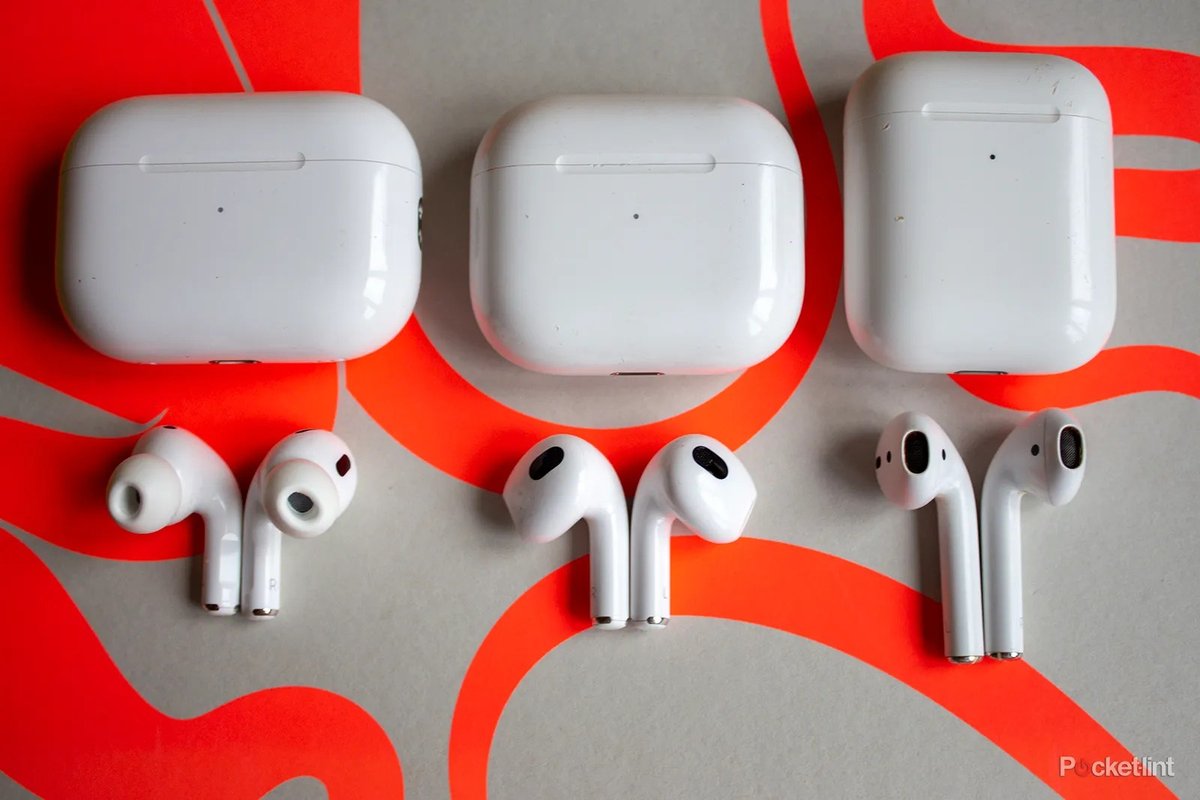
When Apple unveiled the 1st Generation AirPods in December 2016, they didn't just introduce another gadget; they ignited a wireless audio revolution. Suddenly, tangled wires were relics of the past, and seamless, on-the-go listening became an everyday reality. Fast forward to today, and you're faced with a sprawling family of AirPods – from the sleek, updated standard models to the noise-cancelling Pros and the premium Max. This journey from the original 'buds to their sophisticated descendants, along with a robust market of alternatives, presents a fascinating question: are those pioneering 1st Gen AirPods still relevant, or is it time to upgrade, or perhaps look elsewhere entirely? We’re diving deep into 1st Gen AirPods vs. Later Models & Alternatives to help you navigate this choice.
If you're still rocking your original AirPods, or perhaps eyeing a secondhand pair for a bargain, you're probably wondering what you're truly gaining (or losing) by sticking with them compared to newer Apple offerings or the diverse universe of rival earbuds. The answer isn't always straightforward, but understanding the evolution of features, sound, and design will make your decision much clearer.
At a Glance: Your AirPods Decision Checklist
- 1st Gen AirPods: Best for casual listening, those on a tight budget, or if you simply prefer their original open-fit design and don't need advanced features like noise cancellation or water resistance.
- Later Standard AirPods (2nd/3rd Gen): Offer incremental improvements like faster connectivity, "Hey Siri," Spatial Audio (3rd Gen), and improved battery life, while maintaining the iconic form factor (though 3rd Gen leans Pro).
- AirPods Pro (1st/2nd Gen): Essential for noise cancellation, a secure in-ear fit, Transparency mode, and robust water/sweat resistance for workouts or commutes.
- AirPods Max: The ultimate choice for audiophiles seeking premium over-ear sound, unparalleled noise cancellation, and a luxurious experience, albeit at a higher price point.
- Alternatives: Consider these if Apple's ecosystem isn't a priority, if you need specific features Apple doesn't offer (e.g., highly customizable EQ), or if you're looking for different price tiers and designs from brands like Sony, Bose, or Samsung.
The Original Game-Changer: A Look Back at 1st Gen AirPods
When the 1st Generation AirPods hit the scene, they weren't just a product; they were a statement. Their unique design, famously likened to electric toothbrush heads, quickly became ubiquitous. But their magic was more than aesthetic; it was in the effortless user experience.
Powered by Apple's W1 chip, these earbuds practically melted into your Apple ecosystem. Open the case, and boom – they were paired. Double-tap to activate Siri, and you were interacting with your digital assistant hands-free. This level of seamless integration was unheard of at the time. They offered about 5 hours of listening time per charge, with the sleek, pebble-like case providing multiple top-ups via a Lightning cable, extending total listening to over 24 hours.
However, the 1st Gen AirPods were undeniably a first draft in some areas. They weren't water-resistant, making them a risky companion for intense workouts or unexpected rain. Active Noise Cancellation (ANC) was still a distant dream, and their "one-size-fits-all" open-fit design didn't seal out external sound, nor did it suit every ear.
Today, while they still connect and play audio, they represent the baseline of the AirPods experience. Their continued functionality speaks to Apple's design philosophy, but the world of wireless audio has moved on considerably. For a deeper dive into the specifics of these pioneering earbuds, you can Learn more about 1st generation AirPods.
Evolving Excellence: How Later AirPods Models Stack Up
The journey from the 1st Gen AirPods to today's expansive lineup is a testament to continuous innovation. Each new model introduced refinements, new features, and improved performance, pushing the boundaries of what wireless earbuds can do.
AirPods (2nd Gen): Subtle Refinements, Same Core
Launched in March 2019, the 2nd Generation AirPods maintained the exact same iconic design as their predecessors. The biggest upgrade was internal: the H1 chip replaced the W1. This wasn't just a technical spec; it translated into faster connection times between devices, lower audio latency (great for gaming and videos), and the introduction of "Hey Siri" support, allowing you to activate Apple's assistant purely by voice, without needing to tap an earbud. Battery life for talk time saw a boost, and Apple offered an optional wireless charging case, though the standard Lightning option remained. These were, in essence, an optimized version of the original, enhancing core performance without altering the user experience dramatically.
AirPods (3rd Gen): A Pro-Inspired Leap for the Standard Line
The 3rd Generation AirPods, arriving in October 2021, marked a significant departure from the original design philosophy for the standard line. They adopted a shorter stem and a more contoured, in-ear design, reminiscent of the AirPods Pro but without the silicone tips for a full seal. This design change brought crucial new features:
- Spatial Audio with Dynamic Head Tracking: A truly immersive 3D audio experience that makes sound seem to come from all around you, even as you move your head.
- Force Sensor Controls: Replaced the double-tap, offering more precise control over playback, calls, and Siri.
- IPX4 Water Resistance: Finally, the standard AirPods could handle sweat and light rain, making them suitable for workouts.
- Improved Battery Life: Up to 6 hours of listening per charge, with a MagSafe-compatible charging case.
The 3rd Gen AirPods are a strong contender if you want many Pro-like features (Spatial Audio, water resistance) but prefer an open-ear design that doesn't fully block out your surroundings.
AirPods Pro (1st Gen): The Arrival of ANC and In-Ear Fit
October 2019 saw the debut of the 1st Generation AirPods Pro, fundamentally changing what people expected from Apple's earbuds. These were an entirely different beast, offering an in-ear design with interchangeable silicone tips for a customizable, secure fit – crucial for their marquee features:
- Active Noise Cancellation (ANC): A game-changer for commuters, office workers, and travelers, effectively blocking out ambient noise.
- Transparency Mode: The ingenious opposite of ANC, allowing you to hear your surroundings clearly without removing your earbuds.
- Adaptive EQ: Automatically tunes the music to the shape of your ear for a consistent listening experience.
- IPX4 Water and Sweat Resistance: Like the 3rd Gen standard AirPods, they were ready for the gym.
The AirPods Pro were for users who needed more than just wireless convenience; they needed immersion and control over their audio environment.
AirPods Pro (2nd Gen): Enhanced Silence and Smarter Sound
Released in September 2022, the 2nd Generation AirPods Pro took everything good about the original Pros and turned it up a notch. While the design remained largely similar, the internal improvements were substantial:
- Significantly Improved ANC: Even more effective at silencing the world around you, thanks to the H2 chip.
- Enhanced Transparency Mode: Now Adaptive Transparency, it intelligently reduces loud environmental noises (like sirens or jackhammers) while letting other sounds through.
- Personalized Spatial Audio: Customizes the Spatial Audio experience based on the unique geometry of your ear.
- Touch Controls: You could now swipe on the stem to adjust volume, adding another layer of convenience.
- Better Battery Life: Extended listening time and a speaker in the MagSafe charging case for easier location via Find My.
For those who prioritize top-tier noise cancellation and the most advanced Apple earbud features, the 2nd Gen AirPods Pro are the current benchmark.
AirPods Max: The Premium Over-Ear Experience
December 2020 introduced a different class of AirPods altogether: the AirPods Max. These are premium over-ear headphones, designed for audiophiles and those who demand the absolute best in sound quality and noise cancellation within the Apple ecosystem.
- High-Fidelity Audio: Delivers rich, detailed sound, far surpassing the in-ear models.
- Industry-Leading ANC: Even more powerful than the AirPods Pro, providing an unmatched quiet environment.
- Adaptive EQ & Spatial Audio: Offer the same smart sound adjustments and immersive experiences.
- Luxurious Design: Featuring a stainless steel frame, mesh headband, and memory foam ear cushions for exceptional comfort. The Digital Crown, borrowed from the Apple Watch, offers precise volume control and playback management.
The AirPods Max are a significant investment, but they deliver a truly premium audio experience for discerning listeners.
What's Next? A Glimpse at AirPods (4th Gen)
While not yet released, the anticipated 4th Generation AirPods, expected in September 2024, indicate Apple's continued commitment to the standard line. Rumors suggest they will include:
- H2 Chip: Bringing improved connectivity and potentially enhanced audio processing.
- Bluetooth 5.3: For more stable and efficient wireless connections.
- USB-C Charging Case: Aligning with broader industry standards and Apple's own device ecosystem.
- Better Sound Quality: A consistent improvement with each generation.
- Improved Noise Blocking for Calls: A crucial feature for many users.
- Dust and Water Resistance: Likely an improved IP rating over previous standard models.
- 6 Hours of Listening Time: Matching the 3rd Gen.
These updates suggest that even the "basic" AirPods will continue to evolve, offering compelling features without stepping into the "Pro" territory of ANC and full in-ear seal.
Feature Face-Off: 1st Gen vs. the Modern Lineup
Let's break down the key differences in a way that helps you visualize the leap from the original to its successors.
| Feature | AirPods (1st Gen) | AirPods (2nd Gen) | AirPods (3rd Gen) | AirPods Pro (1st Gen) | AirPods Pro (2nd Gen) | AirPods Max |
|---|---|---|---|---|---|---|
| Release Date | Dec 2016 | Mar 2019 | Oct 2021 | Oct 2019 | Sep 2022 | Dec 2020 |
| Chip | W1 | H1 | H1 | H1 | H2 | H1 |
| Design | Open-fit, long stem | Open-fit, long stem | Contoured open-fit, short stem | In-ear with silicone tips, short stem | In-ear with silicone tips, short stem | Over-ear, premium materials |
| Noise Control | None | None | None | ANC, Transparency | Adaptive ANC, Adaptive Transparency | Industry-leading ANC, Transparency |
| Water Resistance | None | None | IPX4 (sweat/light rain) | IPX4 (sweat/light rain) | IPX4 (sweat/light rain) | None (earcups not resistant) |
| Spatial Audio | No | No | Yes (Dynamic Head Tracking) | Yes (Dynamic Head Tracking) | Yes (Personalized) | Yes (Dynamic Head Tracking) |
| "Hey Siri" | No (double-tap only) | Yes | Yes | Yes | Yes | Yes |
| Controls | Double-tap | Double-tap | Force Sensor | Force Sensor | Force Sensor, Touch Control | Digital Crown, button |
| Battery Life (per charge) | ~5 hrs listening | ~5 hrs listening, ~3 hrs talk | ~6 hrs listening, ~4 hrs talk | ~4.5 hrs ANC/Transparency, ~3.5 hrs talk | ~6 hrs ANC/Transparency, ~4.5 hrs talk | ~20 hrs ANC/Transparency |
| Charging Case | Lightning | Lightning (optional wireless) | MagSafe, Wireless, Lightning | MagSafe, Wireless, Lightning | MagSafe (with speaker), Wireless, Lightning | Smart Case (Low Power Mode) |
| This table makes it clear: the 1st Gen AirPods are missing many fundamental features now standard or expected in wireless earbuds. Noise cancellation, water resistance, and immersive audio experiences like Spatial Audio are all post-1st Gen innovations. |
Beyond Apple: Why Consider Alternatives?
While AirPods excel within the Apple ecosystem, they aren't the only (or always the best) option for everyone. Venturing beyond Apple can open up a world of features, designs, and price points that might better suit your specific needs. Here's why you might look at alternatives:
- Price Point: AirPods, especially the Pro and Max models, command a premium. Many excellent alternatives offer comparable features at a lower cost.
- Cross-Platform Compatibility: While AirPods work with Android via Bluetooth, you lose many "smart" features like seamless pairing, automatic switching, and "Hey Siri." Non-Apple brands often offer a more robust experience across different operating systems.
- Specific Features or Design: Perhaps you need superior call quality, multi-device connectivity, a truly audiophile-grade sound profile, or a different earbud shape that AirPods don't offer.
- Customization: Many alternatives provide companion apps with extensive EQ adjustments, button remapping, and other personalized settings that Apple often keeps simpler.
- Battery Life: Some competitors boast significantly longer battery life, both in the earbuds and their cases.
Top Alternatives to AirPods
The market for wireless earbuds and headphones is incredibly competitive. Here are some of the standout alternatives that consistently receive high praise:
- Sony WF-1000XM5 (Earbuds) & WH-1000XM5 (Headphones): Widely regarded as industry leaders for Active Noise Cancellation and exceptional sound quality. Their companion app offers extensive customization. A top choice for serious audio enthusiasts.
- Bose QuietComfort Earbuds II / Ultra (Earbuds) & QuietComfort Headphones (Headphones): Bose is synonymous with noise cancellation, and their products deliver. They often provide a comfortable fit and a balanced sound profile, excellent for travel and focus.
- Samsung Galaxy Buds Series (e.g., Galaxy Buds2 Pro): An excellent choice for Android users, especially within the Samsung ecosystem. They offer good sound, ANC, and often unique features tailored to Galaxy devices.
- Google Pixel Buds Pro: Designed with Android users in mind, these offer seamless Google Assistant integration, solid ANC, and a comfortable fit.
- Jabra Elite Series (e.g., Elite 10): Known for their excellent call quality, durable designs, and comfortable fit, often targeting active users and professionals. They also tend to have robust multi-point connectivity.
- Sennheiser Momentum True Wireless 3: For audiophiles seeking superior sound quality in a compact earbud, Sennheiser delivers rich, detailed audio, often with good noise cancellation.
Making Your Choice: Key Factors to Weigh
Deciding on your next pair of wireless audio gear is a personal journey. Here's how to weigh your options, moving beyond simply 1st Gen AirPods vs. Later Models & Alternatives:
1. Budget: New vs. Refurbished vs. Alternatives
Your budget is often the most significant limiting factor.
- 1st Gen AirPods: You can find these very cheaply used, but be wary of battery degradation.
- Later Standard AirPods (2nd/3rd Gen): Mid-range, offering a good balance of features and cost.
- AirPods Pro (1st/2nd Gen): Higher mid-range to premium, especially the 2nd Gen. Refurbished 1st Gen Pros can be a great value.
- AirPods Max: Premium price point, a significant investment.
- Alternatives: Prices range widely. You can find budget-friendly options that outperform 1st Gen AirPods, or premium alternatives that rival AirPods Pro/Max.
2. Usage Scenarios: Commuting, Gym, Calls, Casual Listening
Think about how you'll primarily use them:
- Commuting/Travel: ANC is a game-changer. AirPods Pro or AirPods Max, or ANC-focused alternatives from Sony/Bose, are ideal.
- Gym/Running: Water and sweat resistance (IPX4 or higher) is essential. 3rd Gen AirPods, AirPods Pro, or many robust alternatives (Jabra, Beats) fit the bill.
- Frequent Calls: Look for models with excellent microphone arrays. AirPods Pro 2nd Gen and many Jabra models excel here.
- Casual Listening: If you simply want background music and don't need advanced features, 2nd Gen AirPods or many affordable alternatives are perfectly fine.
3. Ecosystem: Apple-Centric vs. Android/Mixed
- Deep Apple Integration: If you own an iPhone, iPad, Mac, and Apple Watch, AirPods offer unparalleled seamlessness. They automatically switch between devices, and features like Find My are more robust.
- Android/Mixed Devices: While AirPods work, you miss out on much of their "magic." Alternatives built for Android or with robust cross-platform apps will provide a better overall experience.
4. Fit & Comfort: Open-Fit vs. In-Ear (Silicone Tips) vs. Over-Ear
This is highly personal and often overlooked.
- Open-Fit (1st/2nd/3rd Gen AirPods): Sit in the outer ear, allowing you to hear your surroundings. Many find them comfortable for long periods, but they don't seal sound.
- In-Ear with Silicone Tips (AirPods Pro, many alternatives): Create a seal in the ear canal, crucial for ANC and better bass. Some find them intrusive; others prefer the secure fit. AirPods Pro offer tip tests for optimal fit.
- Over-Ear (AirPods Max, Sony/Bose headphones): Enclose the entire ear. Generally offer superior sound and ANC, but are less portable and can be warm.
5. Sound Quality Priorities: Casual vs. Audiophile
- Casual Listener: If you just want clear audio for music, podcasts, and calls, most modern AirPods (2nd Gen onwards) and respectable alternatives will suffice.
- Audiophile: If you prioritize nuanced sound, deep bass, crisp highs, and overall fidelity, AirPods Max or high-end alternatives like Sony's XM series or Sennheiser are your best bet. AirPods Pro offer a good balance for most, but aren't designed for critical listening like over-ear headphones.
6. Essential Features: ANC, Transparency, Spatial Audio, Water Resistance
Decide which features are non-negotiable for you:
- Active Noise Cancellation (ANC): A must for noisy environments (AirPods Pro, AirPods Max, Sony, Bose).
- Transparency Mode: Crucial if you need to stay aware of your surroundings without removing your earbuds (AirPods Pro, AirPods Max).
- Spatial Audio: For an immersive, theater-like audio experience, particularly with supported content (3rd Gen AirPods, AirPods Pro, AirPods Max).
- Water/Sweat Resistance: Essential for workouts or outdoor use (3rd Gen AirPods, AirPods Pro, most modern alternatives).
Common Questions You Might Have
Are 1st Gen AirPods still good in 2024?
For basic, casual listening in quiet environments, and if you simply prefer their open-ear fit, 1st Gen AirPods still work. However, their battery life is likely degraded, they lack modern features like ANC, water resistance, and Spatial Audio, and their sound quality has been surpassed. They are definitely not "good" in comparison to later models or modern alternatives in terms of features or performance.
How do I identify my AirPods model?
You can identify your AirPods by checking the model number.
- On the AirPods: The model number is printed on the first line of text on the underside of each AirPod (e.g., A1523 for 1st Gen).
- On your connected iPhone/iPad: Go to Settings > Bluetooth, tap the "i" icon next to your AirPods, and the model name and number will be displayed.
Can I use AirPods with Android?
Yes, AirPods can connect to Android devices via standard Bluetooth. However, you'll lose Apple-specific features like automatic device switching, "Hey Siri," battery status indicators (beyond the basic Bluetooth connection), and automatic ear detection (though some functionality may remain for playback). To fully unlock advanced features, AirPods are best used with Apple devices.
Is upgrading from 1st Gen worth it?
Absolutely. Upgrading from 1st Gen AirPods will provide significant improvements in sound quality, battery life, connectivity, and potentially introduce essential features like Active Noise Cancellation (AirPods Pro), water resistance (3rd Gen AirPods, AirPods Pro), and Spatial Audio. The leap in user experience is substantial.
What's the best AirPod for calls?
The 2nd Generation AirPods Pro are generally considered the best for calls due to their advanced H2 chip and improved microphone array, which effectively isolates your voice from background noise. AirPods Max also perform very well in this regard, leveraging their larger form factor for microphone placement.
Your Next Steps: Deciding on Your Perfect Pair
The journey from the revolutionary 1st Gen AirPods to the diverse array of models and alternatives available today is a testament to how far wireless audio has come. Your ideal choice hinges on a blend of personal preference, budget, and intended use.
If you're still using 1st Gen AirPods and are relatively happy, congratulations – you've gotten your money's worth from a truly groundbreaking product. But if you've been feeling the itch for better sound, a secure fit, the blissful quiet of noise cancellation, or the immersive world of Spatial Audio, then it's definitely time to explore the newer models or one of the many superb alternatives on the market.
Take stock of your priorities:
- Do you need active noise cancellation for quiet commutes? Look at AirPods Pro or high-end Sony/Bose.
- Is working out or resisting rain a key factor? The 3rd Gen AirPods or any AirPods Pro are designed for it.
- Are you deeply embedded in the Apple ecosystem and prioritize seamless integration? Stick with AirPods, but consider a newer generation.
- Are you an Android user or an audiophile seeking specific sound profiles or extensive app control? The world of alternatives awaits.
By considering these factors, you'll move past the general debate and pinpoint the wireless audio solution that truly enhances your daily life and listening experience. The perfect pair is out there, waiting to connect with you.